
The Industrial Demands of Automated High-Speed Packaging
By late 2020, packaging manufacturing facilities faced relentless pressure to increase packing line productivity. Modern continuous Vertical Form-Fill-Seal (VFFS) and Horizontal Form-Fill-Seal (HFFS) rollstock packaging lines operate at unprecedented speeds, producing between 120 and 220 finished pouches per minute.
At these high machine velocities, flexible rollstock film travels through forming shoulders, tension rollers, registration eye-mark sensors, and heat-sealing jaws at web speeds exceeding 1.2 to 2.5 meters per second.
Under these dynamic mechanical conditions, minor inconsistencies in the rollstock film's surface properties or mechanical tension regulation trigger immediate, expensive line halts:
- Web Wander & Edge Misalignment: The film snakes laterally across guide rollers, causing eye-mark tracking loss, misprinted graphics, and off-center fin seals.
- Slip Additive Blooming & Sealing Contamination: Traditional migratory fatty acid amide slip additives (e.g., erucamide) bloom uncontrollably onto the sealant surface during storage, reducing seal strength and causing film drag over heated metal forming collars.
- Tension Spikes & Pouch Elongation: Fluctuations in unwind brake torque stretch the film elastically, distorting cut-off pouch lengths and producing wrinkled cross seals.
Achieving flawless high-speed packaging requires tight stabilization of the film's dynamic Coefficient of Friction (COF) under ASTM D1894 paired with closed-loop pneumatic dancer tension control.
Friction Physics: The Kinetic COF Operating Window (ASTM D1894)
The Coefficient of Friction ($\mu$) defines the dimensionless ratio of frictional resistance force to the normal clamping force between two contacting surfaces.
Under ASTM D1894 (Standard Test Method for Static and Kinetic Coefficients of Friction of Plastic Film and Sheeting):
- A standardized 200g sled wrapped in test film is pulled horizontally across a polished steel platen at a steady traverse speed of 150 mm/min.
- Static COF ($\mu_s$): The peak force required to initiate sliding motion.
- Kinetic / Dynamic COF ($\mu_k$): The average force sustained during continuous sliding.
       [ COF TENSION OPERATING WINDOW FOR HIGH-SPEED VFFS LINES ]

   COF (Kinetic)
    0.35 |  EXCESSIVE DRAG / SQUEAL: Web sticks to forming collar,
         |  inducing severe motor chatter, film elongation, and jam stops.
    0.30 |-----------------------------------------------------------------
    0.25 |  BORDERLINE ZONE: Marginal tracking stability.
    0.22 |=================================================================
         |  OPTIMAL HIGH-SPEED SWEET SPOT: μ_k = 0.18 - 0.22
    0.18 |=================================================================
    0.15 |  BORDERLINE ZONE: Minor slippage on driven feed belts.
    0.10 |-----------------------------------------------------------------
         |  TELESCOPING & RUNAWAY SLIP: Roll stock unwinds uncontrolled;
    0.05 |  draw-down belts slip, resulting in short-bag cut-offs.
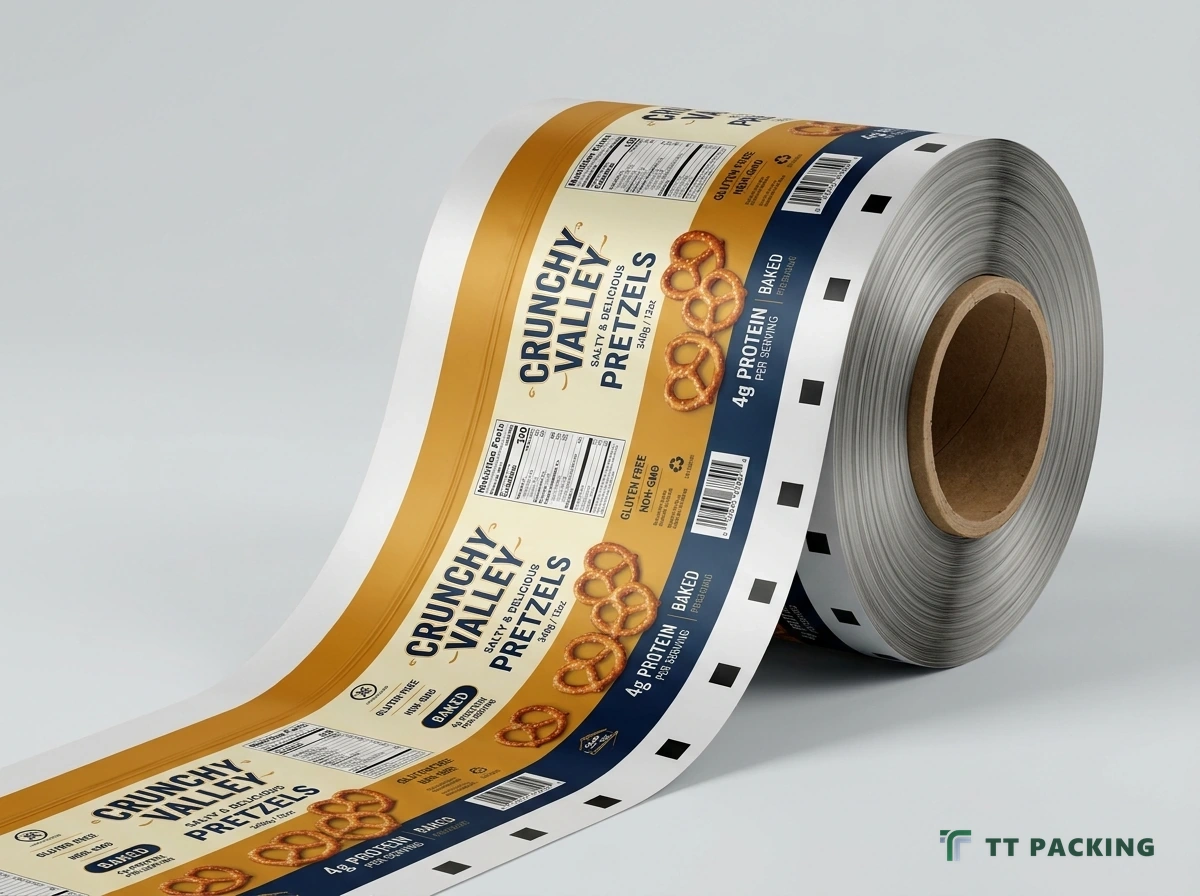 Figure 1: Closed-loop pneumatic dancer arm tension feedback and ultrasonic edge-guiding web alignment diagram.
1. The High-Friction Trap ($\mu_k > 0.30$)
If kinetic friction is too high, the film experiences extreme frictional drag as it wraps around the stainless steel forming shoulder. The servo draw-down belts struggle to pull the web, inducing mechanical motor chatter, stretching the printed image, and causing severe film jamming inside the forming tube.
2. The Low-Friction Trap ($\mu_k < 0.15$)
Conversely, if the film is over-lubricated ($\mu_k < 0.15$), the draw-down vacuum belts lose mechanical traction. The roll slips uncontrollably, producing variable pouch lengths. Furthermore, the master rollstock coil will "telescope" during unwind, causing the edges to shift sideways by tens of millimeters.
3. The Goldilocks Engineering Window
For continuous form-fill-seal lines running $> 120$ ppm, TT Packing engineers the film's sealant surface to maintain a kinetic COF strictly between 0.18 and 0.22 against polished stainless steel at 23°C.
Slip Additive Chemistry: Migratory Erucamide vs. Non-Migratory Siloxane
The conventional method of modifying polyolefin film friction relies on blending organic slip additives into the sealant resin extrusion:
1. Migratory Slip Additives (Erucamide & Oleamide)
- Mechanism: Low-molecular-weight fatty acid amides possess limited compatibility with the polyethylene matrix. Over 48 to 72 hours post-extrusion, these molecules migrate ("bloom") to the film surface, forming a microscopic lubricating wax layer.
- Operational Vulnerability: Migration rate is heavily temperature-dependent. During hot summer warehousing ($> 35^\circ\text{C}$), excessive migration causes heavy white surface haze, decreases corona treatment dyne levels (impairing ink adhesion), and contaminates heat-sealing interfaces, dropping seal strength by up to 40%.
2. Non-Migratory Cross-Linked Polyorganosiloxanes (Silicone Beads)
- Mechanism: High-molecular-weight, spherical cross-linked silicone particles ($2.0,\mu\text{m}$ diameter) are permanently anchored inside the outer skin layer during blown film co-extrusion.
- Operational Advantage: Because the particles are chemically cross-linked into the polymer web, they cannot bloom or migrate regardless of ambient temperature or roll storage time. The COF remains completely stable across multi-month storage horizons, ensuring reproducible machine runnability.
Closed-Loop Mechanical Web Tension Regulation
Even a film with perfect COF will drift if mechanical web tension fluctuates during roll unwind. As the master roll diameter decreases from $800$ mm down to $150$ mm, unwind inertia changes dramatically:
- Pneumatic Low-Friction Dancer Arms: The web passes over a counterbalanced dancer arm suspended on ultra-low-friction pneumatic cylinders. The dancer's vertical position is continuously monitored by a non-contact magnetic rotary encoder.
- Servo-Driven Electronic Braking: A closed-loop PID controller adjusts the unwind servo motor torque in real-time. If the dancer arm rises by as little as 2.0 mm, unwind brake torque instantly decreases, maintaining web tension within $\pm 1.0$ N across the entire roll life.
- Ultrasonic Web Guide Steering: Before entering the forming collar, an ultrasonic sensor tracks the physical edge of the film. An electro-mechanical linear actuator translates the entire unwind carriage laterally, correcting web drift within $\pm 0.5$ mm.
Technical Performance Table: High-Speed Rollstock Formulations
The table below contrasts physical and friction properties across four high-performance rollstock barrier laminates engineered for high-speed automated packaging machinery:
| Rollstock Laminate | Total Thickness | Static COF ($\mu_s$) (ASTM D1894) | Kinetic COF ($\mu_k$) (ASTM D1894) | Seal Initiation Temp (SIT) | Maximum Line Speed (VFFS Pillow Bags) | Typical Defect Rate |
|---|---|---|---|---|---|---|
| BOPP 20 / Met-BOPP 20 | 40 μm (1.6 mil) | 0.24 ± 0.02 | 0.20 ± 0.01 | 105°C | 180 - 220 ppm | < 0.05% (Extremely Fast & Stable) |
| PET 12 / AL 7 / PE 60 | 79 μm (3.1 mil) | 0.28 ± 0.03 | 0.22 ± 0.02 | 135°C | 90 - 130 ppm | < 0.10% (High Barrier Export) |
| BOPP 20 / EVOH-PE 50 | 70 μm (2.8 mil) | 0.26 ± 0.02 | 0.21 ± 0.01 | 115°C | 140 - 170 ppm | < 0.08% (Clear High Barrier) |
| MDO-PE 25 / Mono-PE 55 | 80 μm (3.1 mil) | 0.25 ± 0.02 | 0.19 ± 0.01 | 98°C (Fast Melt) | 150 - 190 ppm | < 0.06% (100% Recyclable PE Loop) |
5-Point Quality Assurance SOP for High-Speed Rollstock Master Rolls
TT Packing inspects every master rollstock production batch through five strict analytical testing procedures:
- Audit Step 1 - Heated Platen Dynamic COF Testing: ASTM D1894 COF testing conducted both at ambient room temperature (23°C) and on an elevated heated platen (50°C) to simulate forming collar friction.
- Audit Step 2 - Optical Web Width & Eye-Mark Registration: High-speed digital camera scanning verifying roll width variance remains within $\pm 0.5$ mm and eye-mark pitch variance within $\pm 0.2$ mm across 10,000 meters.
- Audit Step 3 - Roll Profile Hardness Mapping: Non-destructive Schmidt hammer impact testing across the width of the wound roll to eliminate uneven roll hardness that causes bag wrinkling.
- Audit Step 4 - Heat Seal Initiation Curve: Laboratory heat sealer evaluation profiling seal strength from 90°C to 160°C in 5°C increments to define the certified packaging window.
- Audit Step 5 - Dynamic Splicing Tape Integrity: Tensile verification of rollstock splices; splice joints must survive high-speed machine passage without separating under 120 N web tension.
Maximize Your Automated Packing Efficiency with TT Packing
TT Packing manufactures high-speed custom printed rollstock film compatible with all major global packaging machinery brands including Bosch, Ilapak, Ishida, Multivac, and Matrix.
Our engineering services include:
- Complimentary Eye-Mark Registration Dielines: Tailored print layouts optimized for your machine's optical sensors and cutoff knife positioning.
- Test Trial Rollstock Coils: Production-grade sample rolls supplied with certified COF profiles for on-site machine commissioning (shipping cost 100% credited toward initial production order).
- On-Site Machinery Optimization: Packaging engineers available to assist your operations team with forming collar alignment, dancer brake calibration, and sealing jaw heat profiling.

Rollstock Film
Rollstock film is continuous flexible laminate supplied on standardized cores for high-speed automated packaging machinery. Formulated with precise Coefficient of Friction (COF) and high hot-tack strength, our rollstock ensures jam-free machine operation at speeds exceeding 150 bags per minute.