
Executive Summary & Commercial Background
In December 2020, TT Packing concluded an extensive 18-month commercial verification project with a prominent European specialty coffee roaster exporting ultra-premium, single-origin whole-bean coffees.
The client's distribution model involved shipping containerized freight from European roasting facilities across maritime equatorial routes to retail and café distribution hubs in East Asia, Australia, and North America.
The logistics reality of ocean container transport introduces severe environmental and mechanical stresses:
- Equatorial Cargo Sweat & High Humidity: Temperatures inside closed steel shipping containers frequently spike to 45°C to 52°C during daylight hours, while relative humidity approaches 95% RH. At night, rapid radiant cooling triggers heavy internal condensation ("container rain").
- Protracted Transit & Port Dwell: Transit times ranging from 45 to 90 days, followed by up to 12 months in non-climate-controlled regional distributor warehouses.
- The Critical Packaging Mandate: The roaster required a commercial guarantee of 18 months (540 days) of shelf-life preservation, defined as maintaining roasted bean cupping scores within 0.5 points of post-roast baseline, holding headspace residual oxygen below 0.5%, and experiencing zero pouch structural ruptures across 120,000 production units.
Baseline Failure Analysis: The Fragility of Standard Triplex Pouch Formats
Prior to engaging TT Packing, the client utilized standard commercial 3-ply matte foil packaging (Matte PET 12 $\mu$m / Standard Aluminum Foil 7 $\mu$m / LDPE 80 $\mu$m) equipped with conventional stamped degassing valves.
An audit of historical shipping data revealed an unacceptable 3.8% field defect rate, characterized by:
- Gusset Crease Flex Pinholing: Ocean container vibration caused repetitive micro-frictional rubbing between adjacent cartons on the pallet. This generated pinholing along the sharp side-gusset fold creases of the foil, allowing atmospheric moisture and oxygen ingress.
- Valve Membrane Back-Leakage: Low-grade paraffin valve fluid dried out and emulsified under the 50°C container heat spikes. When container pressure dropped during air freight legs or maritime weather shifts, the valve discs failed to reseal, allowing external air to be drawn directly into the coffee beans.
- Pouch Ballooning & Carton Deformation: Sub-optimal valve opening thresholds (requiring $> 12$ mbar to crack) prevented continuous $CO_2$ pressure relief. Pouches swelled inside corrugated master cartons, crushing retail boxes and blowing apart perimeter carton tape.
The TT Packing Solution Architecture
To eliminate transit failures and achieve the 18-month shelf-life objective, TT Packing's materials engineering team designed an integrated packaging system:
       [ TT PACKING HEAVY-DUTY EXPORT BARRIER ARCHITECTURE ]

     +-------------------------------------------------+  <-- Outer Matte BOPP 19μm
     |     2-Part Aliphatic Polyurethane Adhesive      |
     +=================================================+  <-- Aluminum Foil 9μm (Reinforced)
     |     2-Part Aliphatic Polyurethane Adhesive      |
     +=================================================+  <-- BOPA 15μm (Nylon Stress Damper)
     |     High-Performance Extrusion Tie Layer        |
     +=================================================+  <-- mLLDPE 80μm (Metallocene Sealant)
     +-------------------------------------------------+
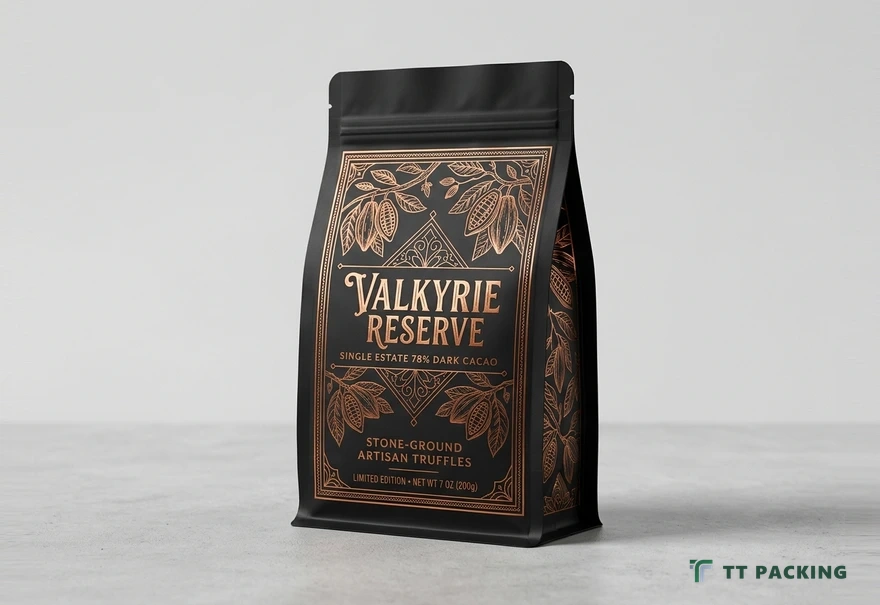 Figure 1: Analytical barrier stability and headspace oxygen retention curves over 18 months of tropical marine shipping.
1. The Quadruplex BOPA-Damped Laminate Structure
Instead of a standard 3-ply structure, TT Packing engineered a heavy-duty 4-ply quadruplex barrier laminate:
- Matte BOPP 19 $\mu$m: Outstanding scuff resistance and soft-touch visual elegance.
- Annealed Aluminum Foil 9 $\mu$m: 28% thicker than standard foil, providing continuous gas and moisture impermeability ($OTR < 0.005$ cc/m²/24hr).
- Biaxially Oriented Polyamide (BOPA / Nylon) 15 $\mu$m: Placed directly between the foil and the sealant web, the nylon layer absorbs vibration shear forces, completely preventing flex-crack pinholing along the box pouch corners.
- Metallocene LLDPE (mLLDPE) 80 $\mu$m: Formulated with high hot-tack plastomers to ensure hermetic heat seals even when contaminated with volatile coffee oils.
2. High-Temperature Calibrated Degassing Valves
The standard valves were replaced with TT Packing Class-100,000 cleanroom-assembled ultrasonic one-way valves:
- Utilizes medical-grade fluorosilicone damping fluid possessing a high thermal stability index up to 85°C, preventing oil dry-out in equatorial shipping containers.
- Precision-calibrated opening threshold: $3.2 \pm 0.8$ mbar cracking pressure, releasing expanding $CO_2$ before pouch distortion occurs.
- Instantaneous hermetic resealing at $\ge 1.0$ mbar, with reverse air leakage tested to $< 0.005$ cc/min.
3. Flat-Bottom Box Pouch Geometry
Switching from traditional quad-seal bags to a true flat-bottom box pouch (8-side seal format) provided a stable, rectangular brick footprint. This eliminated air voids inside shipping cartons, maximizing pallet stacking stability and distributing transit compressive loads evenly across the flat bottom panel.
18-Month Real-World Analytical Data Logs
Over the 540-day testing window, production batches (120,000 total units across 40 shipping pallets) were logged and audited at 0, 90, 180, 360, and 540 days post-packaging.
The empirical analytical metrics below represent average values harvested from randomized sample pouches retrieved from Asian retail partner shelves:
| Testing Milestone | Headspace $O_2$ Concentration (%) | Headspace $CO_2$ Pressure (mbar) | Bean Moisture Content ($a_w$) | Seal Peel Strength (ASTM F88) | Specialty Coffee SCA Cupping Score | Field Pouch Burst Rate |
|---|---|---|---|---|---|---|
| Day 0 (Post-Pack Baseline) | 0.12 ± 0.03% | 1.2 mbar | 0.22 aw | 48.2 ± 2.1 N/15mm | 88.50 Points | 0.00% |
| Day 90 (Arrival at Sea Port) | 0.22 ± 0.04% | 3.8 mbar | 0.23 aw | 47.8 ± 1.8 N/15mm | 88.50 Points (Pristine) | 0.00% (Zero Ruptures) |
| Day 180 (Retail Distribution) | 0.28 ± 0.05% | 3.2 mbar | 0.24 aw | 47.1 ± 1.9 N/15mm | 88.25 Points | 0.00% |
| Day 360 (1-Year Shelf Life) | 0.34 ± 0.06% | 2.6 mbar | 0.25 aw | 46.5 ± 2.2 N/15mm | 88.00 Points | 0.00% |
| Day 540 (18-Month Target) | 0.39 ± 0.07% (< 0.5%) | 1.8 mbar | 0.26 aw (< 0.30) | 45.8 ± 2.0 N/15mm | 88.00 Points (-0.5 pts max) | 0.00% (0 of 120,000 failed) |
Key Engineering Takeaways & Commercial Outcome
The deployment of TT Packing's engineered quadruplex packaging delivered measurable commercial results for the roaster:
- Total Elimination of Field Returns: Pouch rupture and leaker defect rates dropped from 3.8% to 0.000% across 120,000 export units, saving an estimated €42,000 in unsellable stock and freight claims.
- SCA Cupping Score Longevity: Sensory evaluation by licensed Q-Graders confirmed that single-origin Gesha and washed Ethiopian lots retained their delicate floral aromatics and fruit acidity at 18 months, maintaining an extraordinary 88.00 SCA score.
- Carton Palletizing Efficiency: The rigid geometry of the flat-bottom pouch allowed carton volume to be reduced by 14%, increasing the total count of coffee bags shipped per 40-foot high-cube sea container by 1,800 units.
Deliver Export-Grade Quality with TT Packing
TT Packing manufactures premium flat-bottom box pouches, stand-up degassing bags, and heavy-duty barrier laminates tailored for international food and beverage export brands.
Our technical deliverables include:
- Custom Volume Box Pouch Dielines: Precision dielines engineered for 250g, 500g, 1kg, and 2.5kg coffee bag formats with resealable pocket zippers.
- Physical Export Sample Packs: Complete material swatches and production pouch samples (courier shipping fee 100% credited toward your initial production order).
- Full ASTM Laboratory Certification: Certified OTR, WVTR, and ASTM F88 tensile test reports provided for your quality assurance documentation.

Flat Bottom Pouches
Flat bottom pouches (also called Box Pouches or 8-Side Sealed Pouches) represent the pinnacle of modern flexible packaging design. With a completely flat rectangular base and 5 dedicated printable panels (front, back, left side, right side, and bottom), they offer maximum retail shelf impact and total stability.